


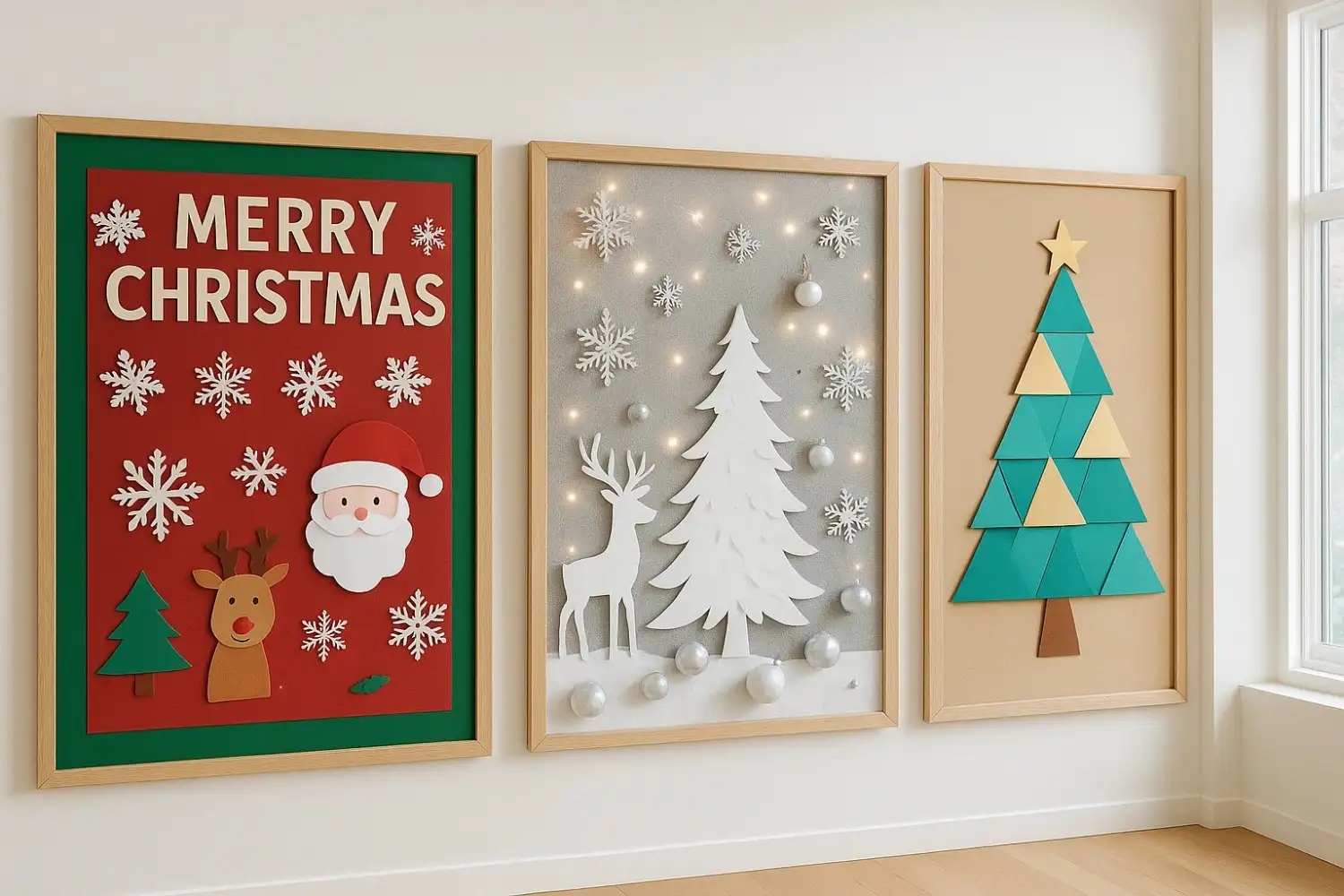
TLDR: Quick Guide
TLDR (Quick Guide): Transform your bulletin boards, notice boards, and display areas this holiday season without the stress. This guide covers practical Christmas decoration ideas for classrooms, offices, and homes—from 15-minute quick fixes (snowflake cascades, garland frames) to creative projects (3D layered scenes, interactive advent boards). You’ll find ideas organized by effort level, location, and theme, plus step-by-step execution tips. Whether you’re working with limited budget, tight timeline, or diverse audiences, there’s an approach here that fits. The focus: helpful, achievable ideas that create joy without requiring artistic talent or excessive spending.
Table of Contents
Walk into any school in early December, and you’ll likely spot at least one teacher frantically pinning red and green paper to a bulletin board at 7:30 AM. I’ve been that teacher. I’ve also been the office manager scrambling to make our break room feel festive on a $20 budget, and the parent helping with classroom parties who suddenly realizes “we forgot about the door display.”
This guide exists because christmas board decoration ideas shouldn’t be stressful. Whether you’re working with a classroom bulletin board, an office notice board, or a display board at home, the goal is the same: create something that makes people smile without spending your entire weekend (or paycheck) on it.
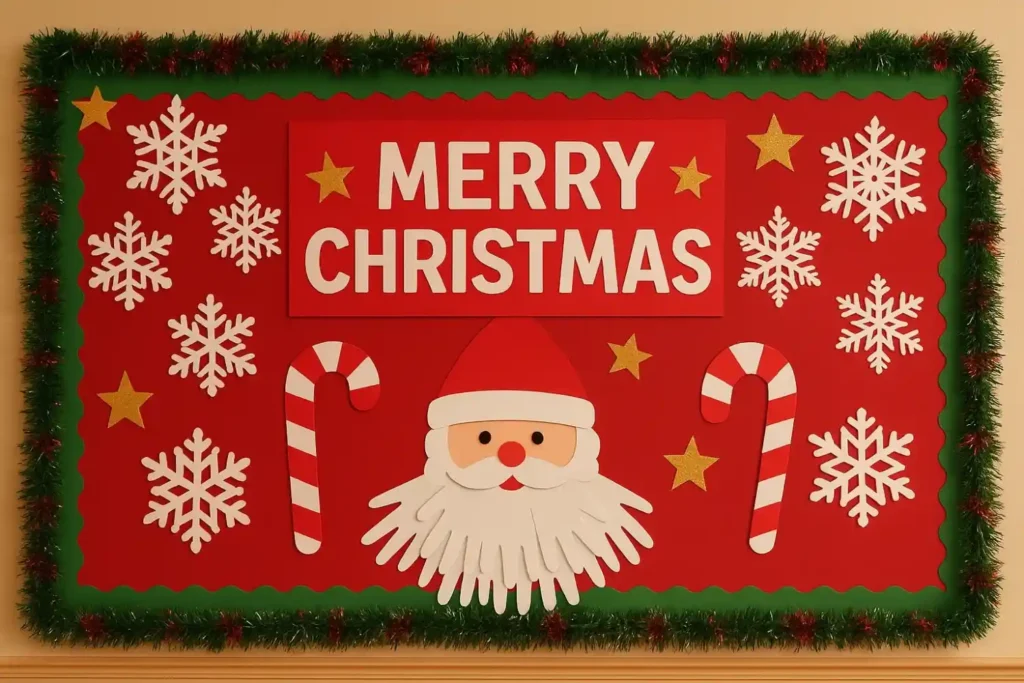
At Quickquotes 4u, we believe the best holiday decorations combine creativity with simplicity—allowing anyone to create beautiful displays that spread joy without adding stress to an already busy season.
Who This Guide Is For
You’ll find practical ideas here if you’re:
- Teachers looking for classroom-appropriate designs that won’t take all weekend
- Office managers needing professional but festive workspace decorations
- Parents helping with school parties or events
- Anyone who wants their space to feel special during the holidays
The ideas range from “I have 30 minutes and construction paper” to “I want to create something memorable,” so you can choose what fits your time, budget, and skill level.
Understanding Your Board Options
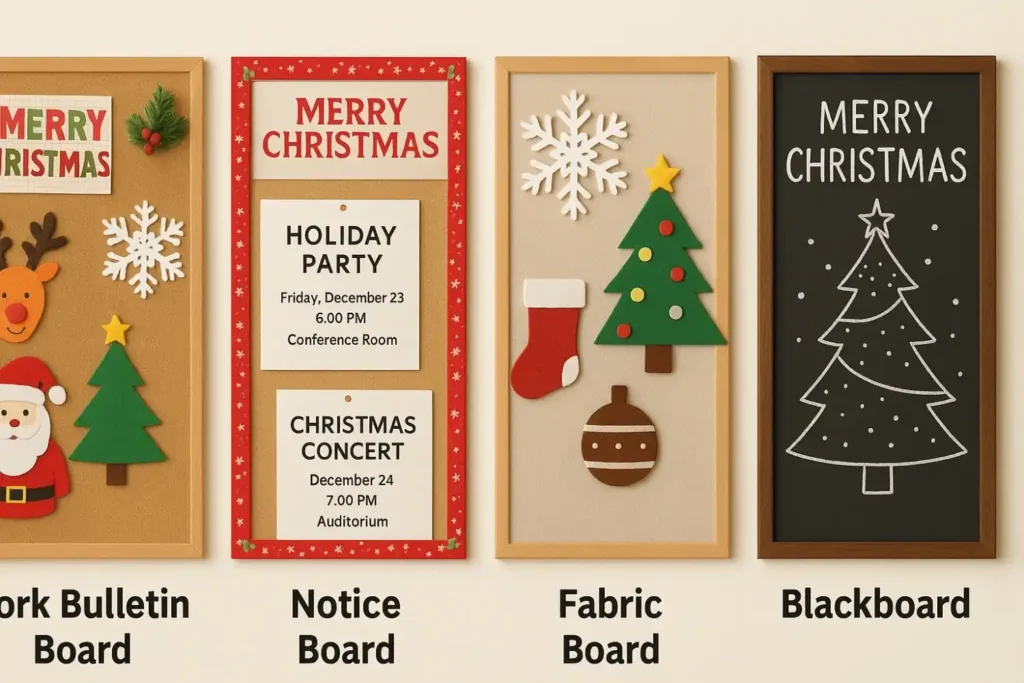
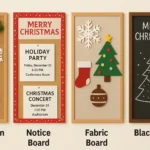
Before diving into decoration ideas, it helps to know what you’re working with. Different boards suit different approaches.
Bulletin Boards are your most flexible option. The cork or fabric surface accepts pins easily, which means you can layer elements, adjust as you go, and change things throughout December. These work beautifully in classrooms where you might want to add student work or create interactive elements.
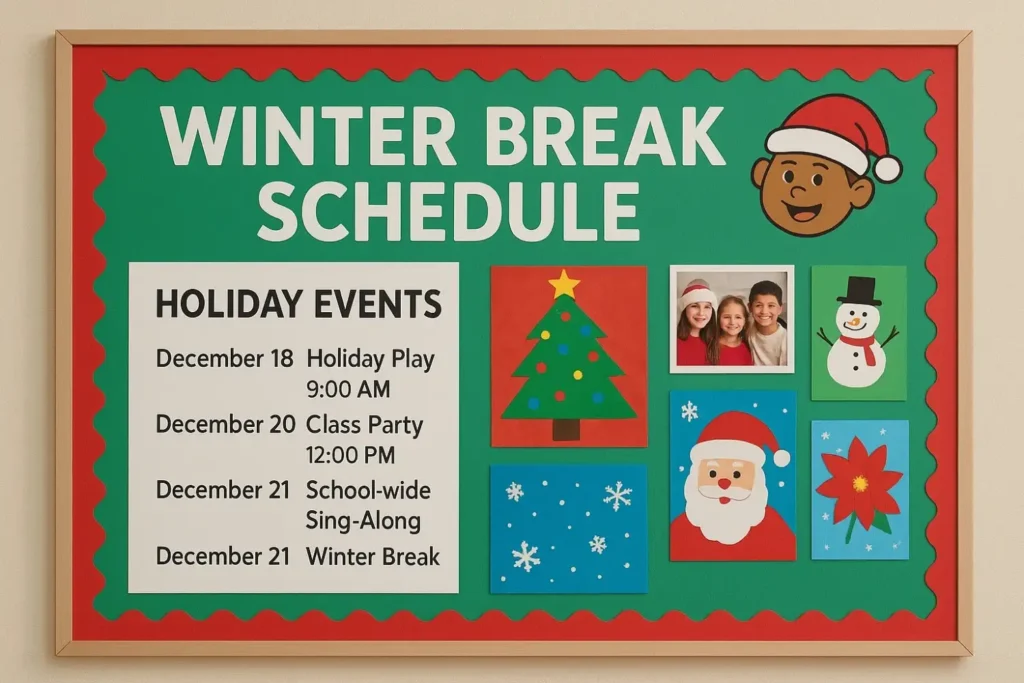
Notice Boards serve a dual purpose during the holidays. Your challenge here is making information readable while still festive. Think of decorations as a frame for your content rather than the main event—holiday borders and corner accents that guide the eye without overwhelming important dates and announcements.
Soft Boards (fabric-covered display boards) give you wonderful texture options. Felt sticks to itself, fabric backgrounds add warmth, and you can create dimensional effects that flat boards can’t achieve. They’re particularly effective for tactile, sensory-friendly displays in preschool settings.
Blackboards create striking contrast. Chalk art, liquid chalk markers, and white or metallic decorations pop beautifully against dark backgrounds. I’ve found these work especially well for countdown calendars or when you want one dramatic focal point rather than overall coverage.
Easy Ideas When Time Is Short
Let’s be honest—most of us are decorating between everything else on our plates. These approaches deliver visual impact without requiring artistic talent or hours of work.
The Snowflake Cascade (20-30 minutes)
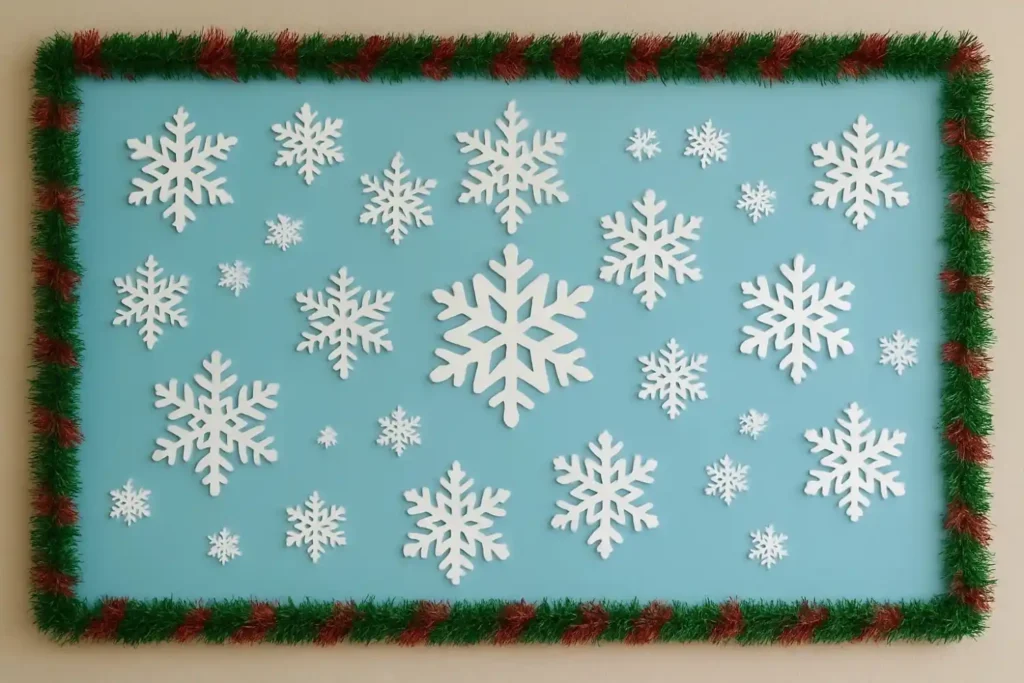
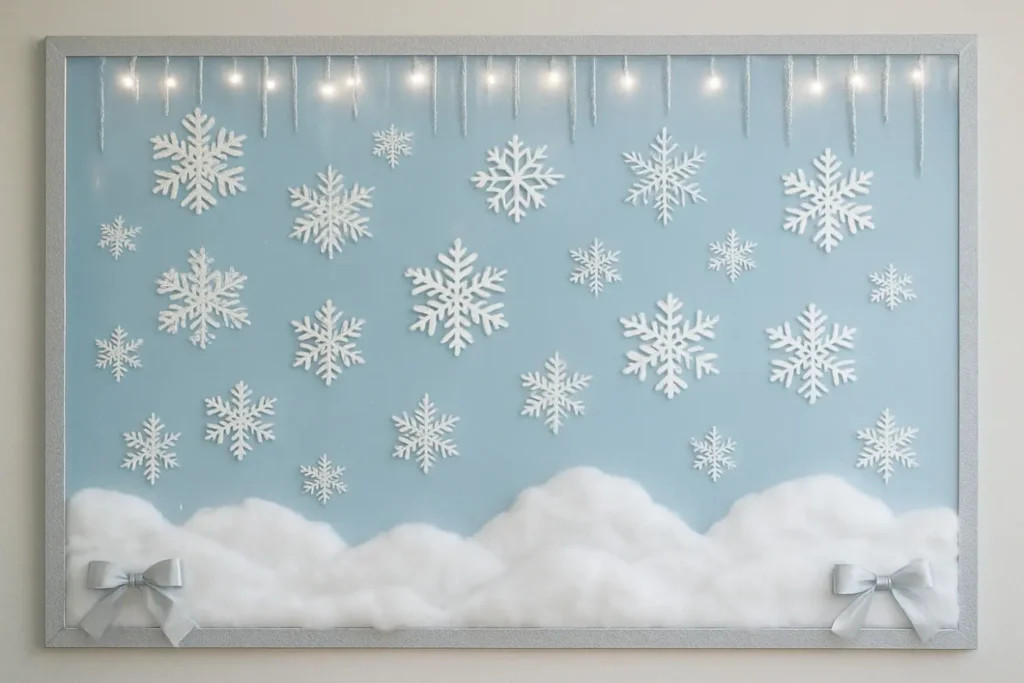
Cut various sizes of paper snowflakes and arrange them flowing diagonally across your board. Start dense in one corner and let them scatter and thin out as they move across. Use white on a solid blue or red background, or try silver and pale blue for an icy effect.
Why this works: Movement catches the eye. The diagonal flow creates energy, and snowflakes are universally recognized as festive without being religiously specific—helpful in diverse settings.
Simple Garland Frame (15 minutes)
Buy or make a paper garland and frame your entire board with it. Add bows in the corners and one central element—maybe large letters spelling “JOY” or a paper wreath. The border does the decorative heavy lifting while you focus on any functional content in the center.
This is ideal for office notice boards where you need to maintain readable announcements but still want holiday spirit.
The Ribbon Tree (30-45 minutes)
Use ribbons in various widths to create a Christmas tree shape directly on your board. Start with brown ribbon for a trunk, then layer green ribbons in graduated lengths to form the tree. Add buttons, small ornaments, or paper circles as decorations.
No artistic skill required—you’re literally just pinning or taping ribbons in a triangular shape. But the dimensional quality of the ribbon gives it a handcrafted look that photographs well and feels intentional.
Printable Shortcuts
If crafting isn’t your strength, high-quality printables save the day. Look for vintage Christmas postcards, festive quotes in beautiful typography, or patterns you can print and arrange in a grid. The key is good quality printing and thoughtful arrangement—equal spacing between elements creates a modern, organized aesthetic.
Best for: Offices, teenage classrooms, or anywhere you want polish without obvious “I made this with construction paper” vibes.
Creative Approaches for More Impact
When you have more time or want to create something that becomes a talking point, these approaches add layers of interest.
Building Depth with 3D Elements
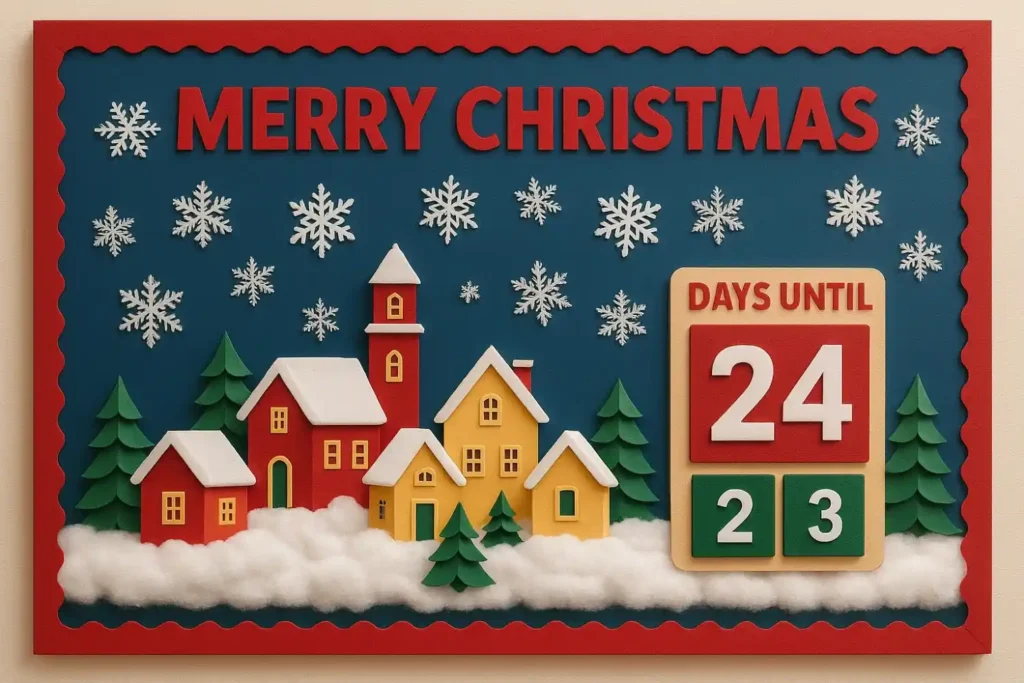
The difference between a flat board and one that draws people in often comes down to dimension. Start with a background scene, add middle-ground elements raised on foam squares or folded paper for elevation, then include foreground details.
For example: Create a snowy landscape background using white and blue paper. Add small houses in the middle layer, elevated slightly off the board. Finish with dimensional snowflakes, trees, and maybe a snowman in the foreground. The layering creates a scene rather than just a decoration.
This technique works particularly well for classroom displays where you want something that holds kids’ attention and rewards closer inspection.
Interactive Advent Elements
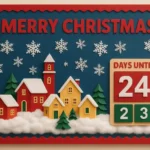
Transform your board from decoration into a daily event. Create 25 numbered pockets, envelopes, or lift-the-flap sections, each containing something small: a holiday joke, a random act of kindness challenge, a fun fact, or a piece of a larger image that reveals itself over the month.
I’ve seen this work beautifully in both classrooms (where kids take turns opening the daily surprise) and office break rooms (where it becomes a gathering point and conversation starter).
Memory and Photo Displays
Personal connection often matters more than perfect execution. Dedicate your board to Christmas memories—photos from past holidays, current celebrations, or even anticipated events. Create sections with festive borders and include captions or stories.
This approach resonates especially well in community spaces—church halls, workplace break rooms, family gathering areas—because it celebrates the people using the space rather than just the holiday itself.
The Living Countdown
Make your board dynamic by incorporating elements that change daily as Christmas approaches. A paper chain that loses one link each day, numbered ornaments that flip to reveal a new color, or a sleigh that physically moves closer to a “North Pole” marker.
Kids love these, but honestly, adults do too. There’s something satisfying about that daily ritual, and it keeps people engaging with your board throughout the season rather than just glancing at it once.
Classroom-Specific Considerations
Teaching spaces have unique needs—your board often serves multiple purposes, and you’re juggling decoration with curriculum, limited budget, and the reality that 20+ kids will interact with whatever you create.
Integrating Learning Objectives
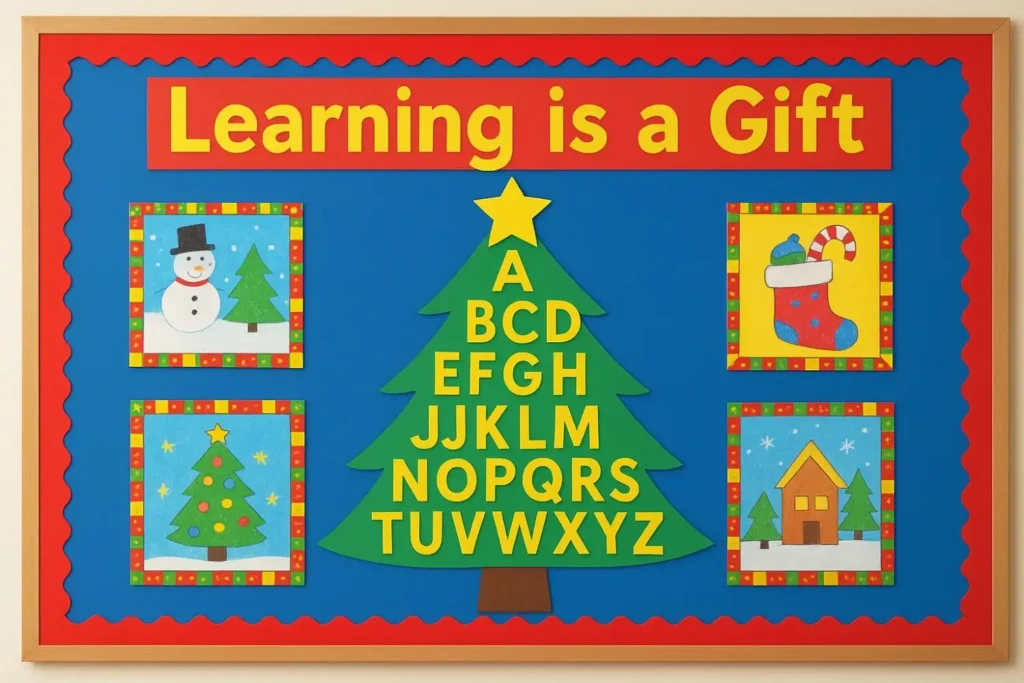
The most successful classroom boards I’ve seen do double duty. A “Holiday Math Tree” where each ornament contains a problem to solve. A “Winter Around the World” geography display showing how different cultures celebrate. An “Advent Vocabulary” board introducing a new seasonal word each day.
This justifies the wall space to administrators and to yourself when you’re wondering if you have time for “just decoration.” You’re teaching, just making it festive.
Showcasing Student Work
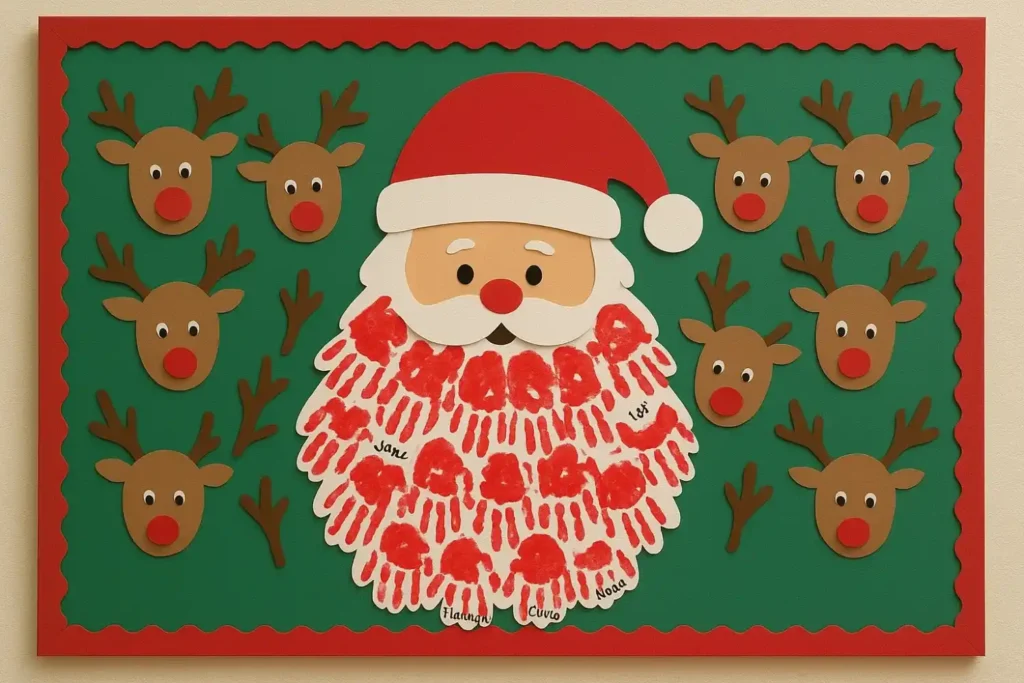
Let the kids do most of the creating. Have each student make one snowflake, ornament, or holiday drawing, then arrange these with a festive border and title. This validates their effort, involves them in the classroom environment, and honestly saves you hours of work.
For preschool settings, handprint projects work beautifully. A large Santa face where children’s handprints form his beard, each labeled with their name. Or individual reindeer faces made from paper plates that become Santa’s full sleigh team across your board.
Behavior Motivation Systems
If you use bulletin boards for behavior tracking, why not make it seasonal? Create a Christmas-themed system where students move toward a goal—building a snowman collectively, moving names closer to Santa’s workshop for positive behavior, or adding ornaments to a class tree for achievements.
These systems serve your classroom management while creating decoration, which is the holy grail of teacher efficiency.
Keeping It Age-Appropriate
Preschool boards should be simple, colorful, bold, and ideally touchable. Use large shapes, primary colors, and consider adding textured elements—felt ornaments, bubble wrap “snow,” corrugated cardboard for tree bark. Young children learn through multiple senses.
Elementary students can handle more complexity and often enjoy interactive elements or clever humor. Middle and high school students appreciate more sophisticated design—geometric patterns, modern typography, maybe even subtle or ironic takes on holiday themes.
Professional Spaces: Office and Workplace Boards
Workplace decorations walk a different line. You want festive without childish, inclusive without bland, and eye-catching without being distracting.
The Inclusion Balance
In diverse workplaces, winter themes often work better than specifically Christmas imagery. Snowflakes, winter landscapes, snowmen, and seasonal wishes like “Happy Holidays” or “Season’s Greetings” create warmth without assuming everyone celebrates the same way.
That said, if your workplace does celebrate Christmas specifically, own it—just be thoughtful about execution. Traditional doesn’t have to mean religious imagery; it can mean the cultural elements most people associate with the season.
Maintaining Professionalism
Your office board represents organizational culture. Avoid anything too crafty or elementary unless that matches your brand (creative agencies, children’s organizations, etc.). Instead, think clean lines, quality materials, sophisticated color palettes.
A simple approach: Solid color background, quality printed quote in beautiful typography, minimal embellishments. Or a winter scene photograph (or printed image) as your full background with a simple greeting overtop.
Making It Functional
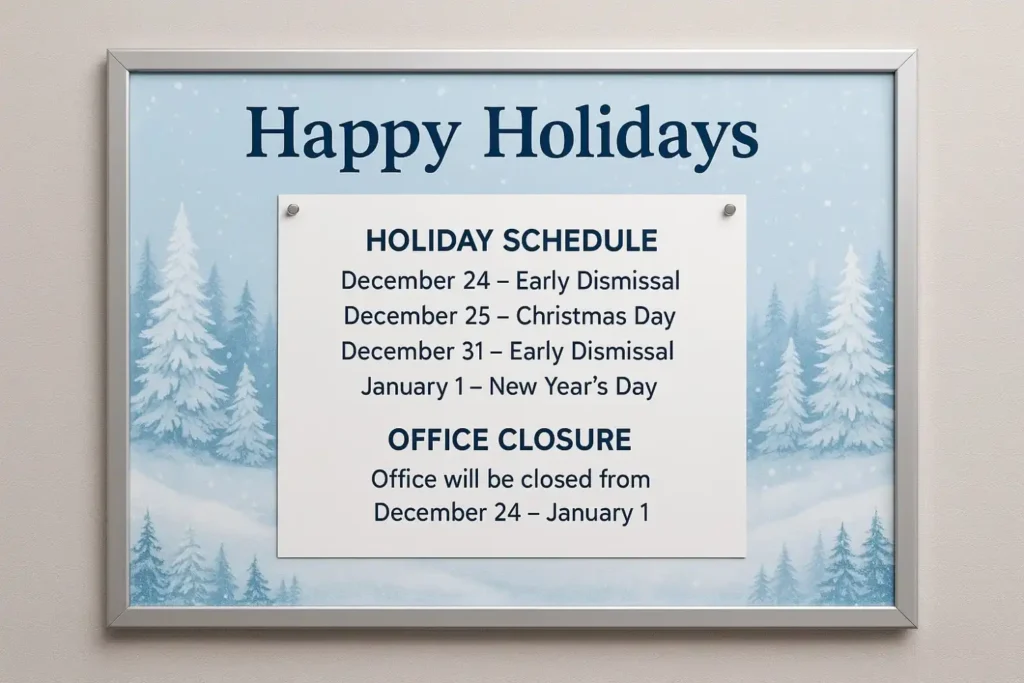
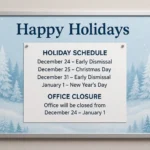
Most office notice boards need to communicate information—holiday party details, year-end schedules, charitable giving opportunities, shutdown dates. Design with zones: one area for essential information, another for purely decorative elements.
Use festive paper for printing your notices, create an attractive header for the information section, and frame everything with seasonal borders. The decoration enhances communication rather than competing with it.
Theme Ideas That Tell a Story
Organized themes create cohesion and make design decisions easier—once you’ve chosen your theme, elements either fit or they don’t.
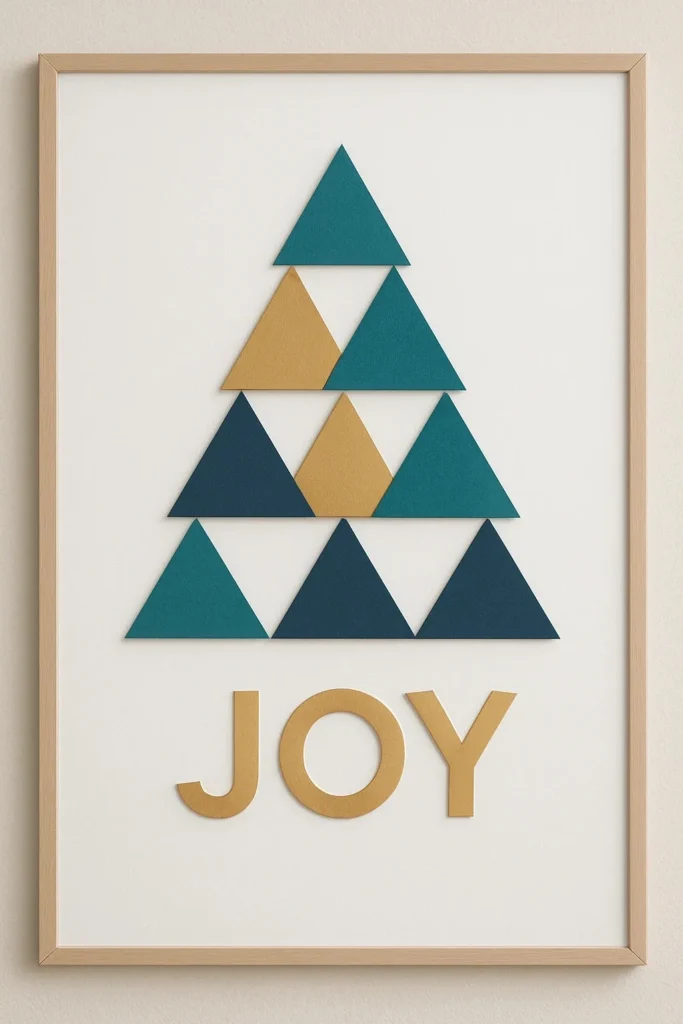
Santa’s Workshop
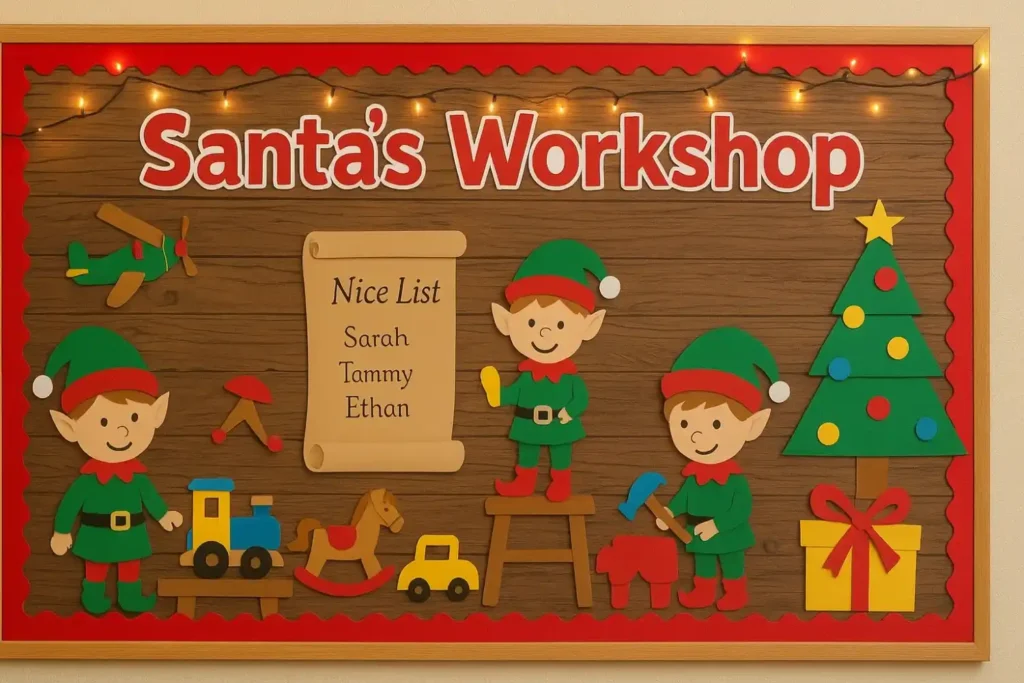
Transform your board into Santa’s bustling workshop with tools hung on pegboard paper, toys in various stages of completion, elf work stations, and a “Nice List” featuring names of students or staff. Brown paper creates workshop wall texture, and dimensional elements like foam core toolboxes add realism.
This theme works across age groups—younger kids love the imaginative play aspect, while older students and adults appreciate the nostalgic callback to childhood Christmas imagery.
Winter Wonderland Serenity
Create a peaceful snowy scene using white, silver, and pale blue. Cotton batting forms realistic snowdrifts, silver glitter adds shimmer to paper snowflakes, white paper trees create a forest silhouette, and if permitted, battery-operated white string lights add magical glow.
This sophisticated theme suits professional settings, churches, or anywhere you want elegance over exuberance.
Nutcracker Magic
Nutcrackers are having a moment in 2025—that nostalgic, storybook quality resonates across generations. Create nutcracker soldiers standing guard, add ballet and music elements, include castles or magical forests, and use rich colors like deep red, purple, and gold.
This theme offers visual richness and connects to cultural tradition without requiring religious imagery.
Candy Land Whimsy
For pure joy, especially with young children, go full candy. Oversized candy canes made from pool noodles wrapped in red ribbon, lollipops from paper plates and wrapping paper, peppermint swirls everywhere, and gumdrop garland.
Sweet, simple, and guaranteed to make kids smile.
Global Celebrations
Showcase how different cultures welcome the winter season. Include representations of various traditions—Hanukkah, Kwanzaa, Christmas, winter solstice celebrations, Diwali—with brief explanations and beautiful imagery.
This educational approach works particularly well in schools with diverse student populations and demonstrates respect for different backgrounds while still celebrating the festive season.
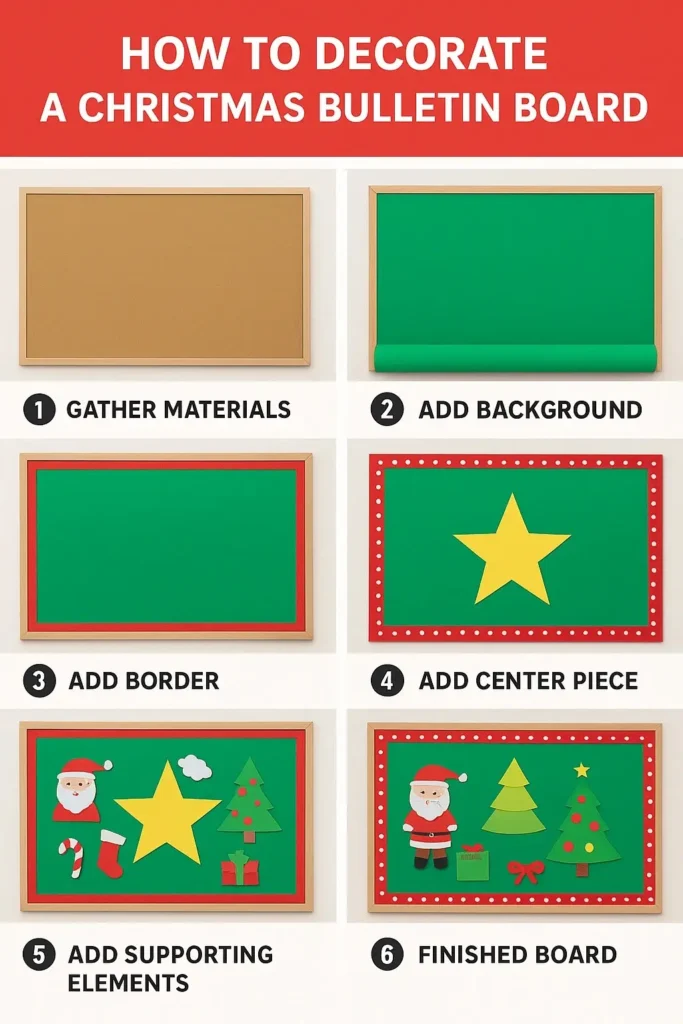
Step-by-Step: The Actual Process
Most decoration guides show finished products without explaining how you actually get there. Here’s the practical workflow.
Step 1: Plan Before You Touch Anything
Seriously. Decide on your theme, list needed materials, and gather everything before you start. Measure your board if you’re covering it completely. Nothing’s more frustrating than being halfway through and realizing you’re short on background paper or forgot tape.
Step 2: Prepare Your Background
Start with a clean board—remove old pushpins, tape residue, everything. Your background options:
- Wrapping paper (affordable, infinite patterns)
- Fabric (textured, reusable, premium look)
- Solid colored bulletin board paper (clean, professional)
- Kraft paper (neutral, let decorations be the color)
For fabric, use a staple gun. For paper, tape works, but for longevity, use pins or a light staple in corners where decorations will cover them.
Step 3: Add Your Border
Borders frame everything and create polish. You can use premade scalloped borders from teacher supply stores, actual ribbon or garland, cut paper strips, decorative washi tape, or a pattern of alternating shapes.
Secure completely—nothing looks more unfinished than a border peeling away from the board.
Step 4: Place Your Focal Point First
Every effective board has a clear focal point—the first thing that draws the eye. This is usually your title, main image, or largest decorative element.
Position it center or slightly above center (slight high placement often looks more balanced). Build everything else around this anchor.
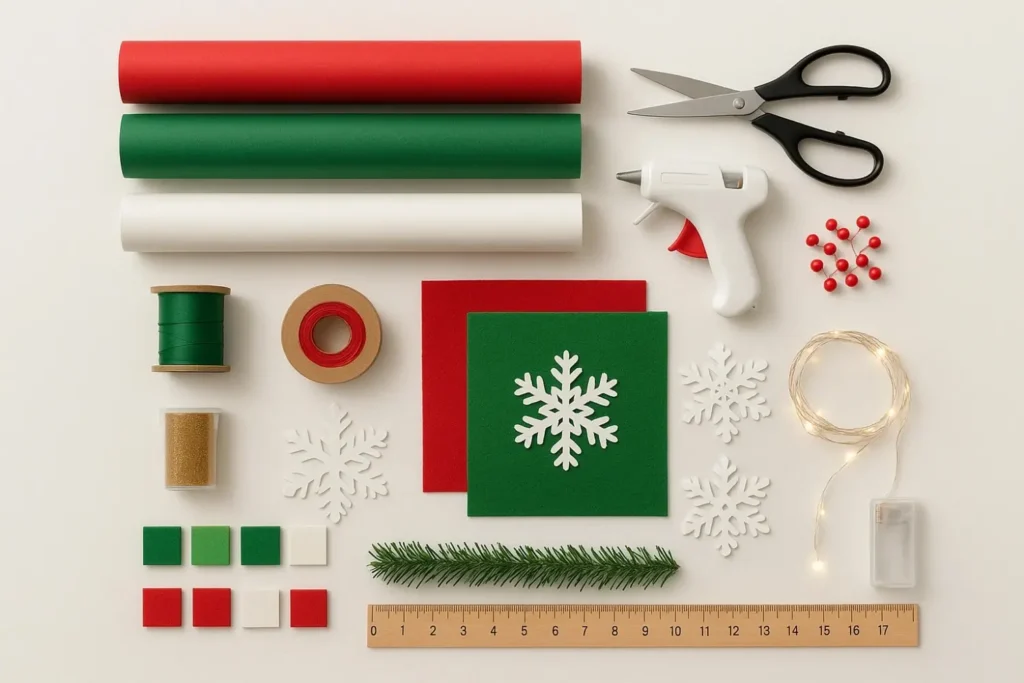
Step 5: Work Outward, Large to Small
Add supporting elements starting with the largest pieces. Step back frequently to check balance—if one side looks heavy, add elements to the other. Try to create visual triangles connecting elements across your board; this creates pleasing movement and keeps the eye traveling.
Step 6: Finish with Details
Small touches elevate good to great: glitter accents on snowflakes, dimensional foam dots under key elements to add depth, carefully placed “snow” (white paint spatters or pulled-apart cotton), small embellishments filling gaps without crowding.
Step 7: View from Distance and Adjust
Stand back to viewing distance—not close-up. Does anything look sparse? Too crowded? Unbalanced? Make final adjustments based on how viewers will actually see it, not how it looks when you’re inches away pinning elements.
Practical Tips from Experience
These are the lessons you learn after decorating a few boards—things that make the difference between “that looks nice” and “wow, that’s impressive.”
Limit Your Colors: Three to four colors maximum. More creates chaos. Traditional red, green, and white never fails, but blue-silver-white creates modern elegance, gold-burgundy-cream feels sophisticated, and red-pink-white offers unexpected freshness.
Embrace Empty Space: Beginning decorators often fill every inch. Resist. Negative space—empty areas—provides visual rest and makes your actual decorations stand out. A board packed edge-to-edge looks cluttered, not festive.
Think in Layers: Background, middle dimension, foreground details. This creates depth. Even simple elements like putting foam squares under some shapes while leaving others flat creates a 3D effect that catches light and adds interest.
Consider Actual Viewing Distance: A board seen from across a cafeteria needs bigger, bolder elements than one beside a doorway where people pass closely. Adjust your scale and detail level accordingly.
Reuse Quality Pieces: Fabric letters, good garland, and durable ornaments can be stored and used multiple years. This spreads your cost and effort while maintaining quality.
Document for Next Year: Take photos of successful boards. You won’t remember exactly what you did, and these images provide starting points for future years or inspiration when you’re stuck.
Collaborate When Possible: Student input, staff contributions, or family help builds investment and community. Plus, it’s genuinely more fun than decorating alone at 8 PM after everyone’s left.
Safety Considerations
Quick practical notes because safety matters:
- Use only battery-operated LED lights—never plug-in lights on boards
- Secure all elements firmly so nothing falls on children
- Avoid small pieces that could be pulled off and become choking hazards in preschool settings
- Keep pathways clear—boards shouldn’t extend into walking spaces
- Check your elements won’t cause allergies (some people react to pine, cinnamon, etc.)
- Never leave decorative lights running overnight in empty buildings
Working with Budget Constraints
Holiday decoration doesn’t require spending. Some of my favorite boards cost almost nothing.
Use what you have: wrapping paper for backgrounds, ribbon scraps, paper from magazines for cutouts, cardboard boxes broken down and painted, nature elements like pinecones collected free.
Dollar stores carry bulletin board borders, decorative paper, and small ornaments affordably. One store trip for $15-20 can supply a full board.
Student or family contributions—handprints, drawings, photos—create personalized decoration that costs nothing and often means more than purchased elements.
Libraries often have book covers, outdated posters, and other materials they’ll give away. Same with home improvement stores (paint chips make great ornaments).
What’s Working in 2025
Current design trends favor warmth over minimalism. After years of sparse, white-heavy aesthetics, people are embracing more ornaments, personal touches, and traditional elements updated with modern execution.
Handmade and nostalgic elements are particularly popular—felt decorations, paper crafts, natural materials like dried oranges and pinecones, and throwback themes like nutcrackers.
Color-wise, we’re seeing traditional red and green return after years of trending toward blues and silvers. But these aren’t flat primary colors—think deep burgundy, forest green, warm metallics.
Mixed metals (gold, silver, bronze together) create richness. Textured materials add warmth. And interactive elements that invite participation rather than just viewing align with broader cultural shifts toward experience over perfection.
Troubleshooting Common Issues
Problem: Board looks flat and boring Solution: Add dimension with foam squares under elements, layer materials, include actual 3D objects
Problem: Too many ideas, looks cluttered Solution: Remove 20% of elements—usually improves balance immediately
Problem: Theme isn’t coming through clearly Solution: Add a title, use more repetition of key theme elements, remove anything that doesn’t fit
Problem: Takes too much time to create Solution: Use bigger shapes (fewer small details), employ printables, get help, or simplify your concept
Problem: Doesn’t photograph well Solution: Increase contrast between background and decorations, add lighting, step back for full-board photos
Timing Your Decoration
Most schools and offices decorate the week after Thanksgiving or early December. This provides several weeks of enjoyment without feeling premature.
Some decorators start right after Halloween, but this risks holiday fatigue—you and your viewers might tire of Christmas decorations by actual Christmas if they’ve been up for two months.
Consider your space’s function. Retail often decorates earlier. Schools might wait until after fall parent conferences. Offices might coordinate with holiday party dates.
If your board serves important functional purposes beyond decoration, wait until you can dedicate it fully to Christmas rather than forcing holiday elements to coexist with unrelated content.
Taking It Down
Admittedly the least fun part, but plan for it. If you used quality materials with reuse potential, take down carefully and store organized by type. Label storage bins clearly so next year you’ll actually find things.
Take photos before dismantling—these inform next year’s planning.
Some boards transition well to New Year themes—you might simply swap “Merry Christmas” for “Happy 2026” and replace some elements while keeping the basic structure.
Why This Matters
At its core, decorating boards isn’t about perfection or competing with Pinterest. It’s about marking time as special, creating shared experiences, and communicating that this space—classroom, office, home—cares enough to celebrate together.
Your board decoration might be the only Christmas touch a student sees regularly. It might be the bright spot that makes someone smile during a stressful work day. It might become the backdrop for photos that families keep for years.
That’s worth the effort, even if some snowflakes hang crooked and the letter spacing isn’t perfect.
Frequently Asked Questions
What are the easiest Christmas board decorations for beginners?
Start with a snowflake cascade—cut various sizes of paper snowflakes and arrange them flowing diagonally across a solid-colored background. It takes under 30 minutes and requires only scissors, paper, and tape. Alternatively, frame your board with garland or ribbon, add corner bows, and place one simple focal point in the center. These approaches look intentional without requiring artistic skills or special materials.
How can I decorate a board for Christmas on a tight budget?
Use what you already have: wrapping paper makes excellent backgrounds, ribbon scraps create borders, old magazines provide cutout materials, and cardboard can be painted and shaped. Dollar stores sell borders, decorative paper, and small ornaments for $1-2 each. Natural elements like pinecones cost nothing if you collect them yourself. Student handprints, family drawings, and photos create meaningful decorations at zero cost—and often matter more than purchased items.
What materials work best for soft board decorations?
Felt is ideal because it adheres to itself, accepts pins easily, and comes in endless colors. Cotton batting creates realistic snow effects with great texture. Fabric backgrounds add warmth and can be reused year after year. Foam sheets cut into shapes add dimension without weight. Pipe cleaners bend into flexible shapes for stars, candy canes, and other decorative elements. All these materials work beautifully with soft boards while creating engaging three-dimensional effects.
How do I make classroom Christmas boards educational?
Integrate your curriculum directly into the decoration. Create an alphabet tree where each letter forms an ornament for letter recognition. Design counting ornaments for math practice. Build a “Winter Around the World” geography display showing global holiday traditions. Use vocabulary-building advent calendars with new seasonal words daily. When your board teaches while decorating, it justifies the wall space and serves multiple purposes during instructional time.
Can Christmas board decorations work for diverse audiences?
Absolutely. Focus on universal winter themes—snowflakes, snowmen, winter animals, and general seasonal joy—rather than specifically religious imagery. Use inclusive language like “Season’s Greetings” or “Happy Holidays” alongside “Merry Christmas.” Feature multiple cultural traditions if appropriate for your community. Winter wonderland themes, cozy season celebrations, and kindness-focused messages resonate across diverse groups while maintaining festive appeal.
When should I put up Christmas board decorations?

Most schools and offices decorate the week after Thanksgiving or in early December, providing several weeks of enjoyment without feeling too early. Some enthusiastic decorators start right after Halloween, but this risks fatigue—you might tire of Christmas decorations before the actual holiday if they’ve been up for two months. Consider your setting: retail spaces often decorate earlier, while schools might wait until after fall parent conferences. If your board serves important functions beyond decoration, wait until you can dedicate it fully to the holiday.
How do I balance festive decoration with functional notice board content?
Create designated zones on your board. Use attractive borders to frame your practical content area, leaving corners and edges for purely decorative elements. Design festive headers for different information sections. Print notices on holiday-themed paper. The key is ensuring functional content remains readable—avoid overwhelming important announcements with excessive decoration. Think of decorations as framing your information rather than competing with it.
What’s the difference between bulletin board and soft board decoration?
Bulletin boards typically have cork or fabric-covered surfaces that accept pushpins easily. Decorations tend to be flatter and two-dimensional—paper cutouts, printed images, fabric pieces that pin flat. Soft boards usually refer to padded display boards, often fabric-covered, where you can easily add three-dimensional elements. Soft boards accommodate texture and depth more readily—think felt layering, dimensional objects, and tactile elements that create sensory interest beyond flat displays.
How can I safely add lights to my Christmas board?
Only use battery-operated LED lights to eliminate fire hazards from heat and electrical issues. Secure lights with clear tape or small pins, ensuring no exposed wires that could catch on passing people. Never leave lights running unattended or overnight in unoccupied spaces unless the area is monitored. Test all light strands before installation to avoid the frustration of discovering dead bulbs after everything’s attached. Consider motion-activated or timed lights for convenience and safety.
My board looks flat and boring—how do I fix it?
Add dimension using foam squares or folded paper under key elements to elevate them off the board surface. Layer materials—background, middle elements slightly raised, foreground details more elevated. Include actual three-dimensional objects like small ornaments, bows with loops, or rolled paper elements. Increase contrast between your background and decorations so elements pop visually. Sometimes simply removing 20% of elements creates better balance and makes remaining pieces stand out more effectively.
Getting Started
If you’re feeling overwhelmed, start simple. Pick one idea from this guide that matches your time budget and materials on hand. Create that. See how it feels.
You can always add more later—boards aren’t one-and-done projects. Some of the best displays evolve throughout December as you think of additions or get inspiration from something you see.
The perfect board doesn’t exist. But the one you create with genuine effort and a bit of holiday spirit? That one’s just right.
Final Thoughts
Here’s what I’ve learned after years of decorating boards: the ones people remember aren’t always the most elaborate or expensive. They’re the ones that feel genuine.
The classroom board where every student contributed a handprint. The office display that made people stop for coffee just to see what new element appeared in the advent calendar. The simple snowflake cascade that somehow captured exactly the right feeling of winter magic.
Your board doesn’t need to compete with social media perfection or match what the teacher next door created. It needs to serve your space and the people in it. If you’re a teacher, that might mean integrating learning objectives. If you’re in an office, it might mean maintaining professionalism while adding warmth. If you’re decorating at home, it might simply mean creating a backdrop for family traditions.

The beauty of board decoration is its flexibility. You can spend fifteen minutes or fifteen hours. You can use dollar store supplies or materials you already own. You can follow a theme precisely or let ideas emerge as you work. There’s no single right approach—only what works for your situation.
Start where you are. Use what you have. Create something that makes your space feel more festive, even if it’s just a garland border and a cheerful greeting. The effort matters more than the execution.
And remember: if your snowflakes hang slightly crooked or your spacing isn’t perfectly symmetrical, you’re in good company. Those small imperfections often add character that polished perfection lacks. They show that real human hands created something with care, and that authenticity resonates.
This December, give yourself permission to decorate at whatever level feels manageable and joyful rather than stressful. Your board will brighten someone’s day regardless of whether it matches your original vision perfectly.
The holiday season passes quickly. The decorations come down. But the memory of a space that felt special, that showed someone cared enough to try, that created a moment of joy during a busy month—that stays.
So grab your construction paper, gather your supplies, and create something that makes your corner of the world a little more festive. However it turns out will be exactly what your space needed.
Looking for more holiday inspiration? Visit Quickquotes 4u for Christmas quotes, decoration ideas for every space, and creative concepts that make celebrations more meaningful throughout the year. From festive sayings to practical holiday tips, we help you add warmth and joy to every season.
- board christmas decoration
- board decoration christmas
- board decoration for christmas day
- board decoration ideas for christmas
- bulletin board christmas decoration
- bulletin board christmas design
- bulletin board decoration ideas for christmas
- christmas black board decoration
- christmas board decor
- christmas board decor ideas
- christmas board decoration
- christmas board decoration ideas
- christmas bulletin board decorating ideas
- christmas bulletin board decorations
- christmas bulletin board ideas
- christmas day board decoration
- christmas decor for bulletin board
- christmas decorating ideas bulletin boards
- christmas decoration board ideas
- christmas decoration for notice board
- christmas decorations for a bulletin board
- christmas decorations for notice board
- christmas decorations on bulletin board
- christmas display board decoration
- christmas display board ideas
- christmas holiday bulletin board ideas
- christmas notice board decoration
- christmas notice board decoration ideas
- christmas notice board decorations
- christmas preschool bulletin board ideas
- christmas soft board decoration
- christmas soft board decoration ideas
- christmas theme board decoration
- classroom christmas bulletin board decorations
- creative christmas bulletin board decorations
- decorating a bulletin board for christmas
- easy christmas board decoration
- easy christmas bulletin board decorations
- merry christmas board decoration
- merry christmas board decoration ideas
- notice board decoration for christmas
- soft board decoration for christmas
- xmas board decoration
- xmas bulletin board ideas





Leave a comment